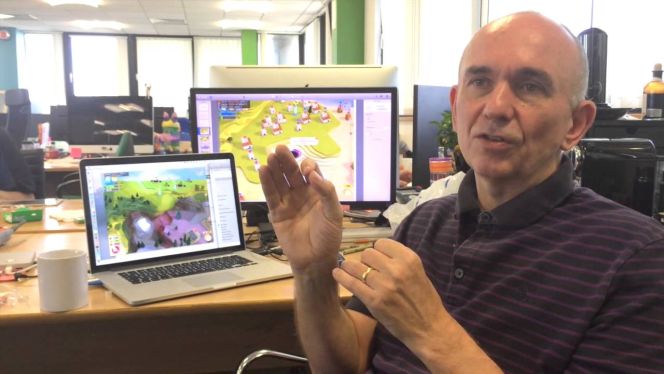
Peter Molyneux is a name that once carried near-mythic weight in gaming. The mind behind Populous, Dungeon Keeper, and Fable was hailed as a visionary—a designer who could reshape how games told stories and built worlds. But behind the charisma and bold promises lies a trail of disillusioned players, frustrated developers, and investors who poured money into dreams that never materialized.
The real cost of Molyneux’s legacy isn’t just broken code or delayed releases—it’s the trust he eroded among those who bet on his word. From crowdfunding backers to studio financiers, these are the people who lost big when his ambitions outpaced reality.
The Cult of Personality That Preceded the Collapse
Molyneux wasn’t just a game designer—he was a showman. His presentations at E3 and industry panels were masterclasses in hype. He didn’t just announce games; he sold epiphanies. When he described Curiosity: What’s Inside the Cube?, he framed it as a social experiment that would “change gaming forever.” When he teased Godus, he promised a god simulator with evolving civilizations shaped by player choice alone.
But the emotional investment he inspired far exceeded what the final products delivered.
This wasn’t just marketing overreach—it was a pattern. And the people who followed him, financially and emotionally, paid the price.
Crowdfunding Backers: Passion Turned to Regret
Few campaigns exemplify misplaced faith like Godus, launched via Kickstarter in 2012. With a modest goal of £45,000, it raised over £500,000—more than ten times its target. Backers weren’t just funding a game; they were buying into a revolution in procedural storytelling and emergent gameplay.
Rewards ranged from digital copies to designer consultations. Some contributors pledged over £1,000 for exclusive “God Architect” status, believing they’d shape the game’s evolution.
What They Actually Got
- A stripped-down, pixelated god game with limited mechanics
- Months of delayed updates and sparse communication
- A "finished" version released in 2017 that still lacked promised features like multiplayer, continent exploration, and AI civilizations
One backer, a longtime fan of Black & White, described the experience: “I funded this because I believed in Molyneux. But what shipped felt like a beta abandoned mid-development. I don’t feel cheated—just incredibly disappointed.”
The failure wasn’t just technical. It was emotional. Crowdfunding relies on trust. When that trust is broken by a figure of Molyneux’s stature, it doesn't just hurt one project—it damages faith in the entire model.
Investors Who Bet on Vision Over Viable Product
While Kickstarter backers lost a few hundred dollars each, private investors lost far more. Molyneux’s studio, 22cans, was backed by serious capital, including investments from prominent tech and entertainment figures drawn in by his reputation.
The Hidden Cost of Charisma Investors didn’t just fund Godus—they bankrolled an entire studio built on the promise of “next-gen god games” and AI-driven ecosystems. But 22cans never delivered a commercially successful product after Godus. Follow-ups like Legacy—a blockchain-based life simulator—were met with public skepticism and poor sales.
Legacy attempted to merge generational gameplay with NFTs, a move that alienated both traditional gamers and crypto enthusiasts. The game launched to low player counts and critical dismissal, leaving investors holding equity in a studio with no clear path to profitability.
One former advisor, speaking anonymously, said: “We invested because Peter had a track record. But we didn’t account for the fact that his strength was in pitching, not shipping.”
Developers Who Burned Out Chasing the Vision
Behind every failed game are teams of developers working under pressure to deliver what marketing already promised. At Lionhead Studios and later 22cans, employees describe a toxic cycle of over-promising and under-delivering.
The Lionhead Legacy: Talent Lost to Burnout At Lionhead, the studio behind Fable, staff routinely worked “crunch” periods of 80+ hour weeks to meet deadlines set by Molyneux’s public statements. Features promised in interviews—like emotionally responsive NPCs or branching morality systems—often had no technical foundation when development began.
Former developers have since spoken out: - One lead designer noted that Molyneux would announce features in press interviews before the team had even discussed them internally. - Another said: “We weren’t building a game. We were scrambling to justify a sales pitch.”
When Microsoft shut down Lionhead in 2016, it wasn’t just the end of a studio—it was a reckoning. Talented developers scattered, many leaving the industry altogether.
The human cost here isn’t measured in dollars, but in careers derailed and creative energy wasted.
Publishers and Partners Left in the Lurch
Even corporate partners weren’t immune. Microsoft, which acquired Lionhead in 2006, expected Fable to become a flagship franchise. Instead, later entries like Fable Legends were scrapped after years of development and millions in expenditure.
/cdn.vox-cdn.com/uploads/chorus_image/image/70269281/112379621.0.jpg)
Fable Legends: The $50 Million Gamble That Died Fable Legends was envisioned as a co-op action RPG with asymmetrical multiplayer—a bold direction for the franchise. But development was plagued by shifting goals, engine changes, and Molyneux’s departure from Lionhead in 2012.
Despite heavy investment and a public beta, Microsoft canceled the game in 2016. Industry estimates place total development costs between $40–50 million.
Publishers like Microsoft absorb losses, but the fallout affects future greenlighting. After Legends, Microsoft hesitated on new Fable projects for nearly a decade. The brand—once a cornerstone of Xbox’s identity—lay dormant.
The Ripple Effect on Gaming Culture
Molyneux’s pattern of over-promising didn’t just hurt individuals—it changed how the industry views developer hype.
Terms like “Molyneux’d” entered gaming slang, used to describe any game that fails to deliver on early promises. The backlash contributed to a broader shift: players now demand demos, playable previews, and transparency before buying in.
Platforms like Steam saw a rise in refund requests for early access titles, partly due to distrust seeded by cases like Godus.
More importantly, Molyneux’s story serves as a cautionary tale for crowdfunded projects. The success of games like Shovel Knight or Hollow Knight proved that fan-funded development can work—but only with clear communication, conservative promises, and relentless execution.
Why Some Still Believe—And Keep Funding
Despite the track record, Molyneux hasn’t disappeared. He continues to launch new projects, often targeting niche or emerging markets. Legacy, despite its failure, still has a small player base.
Why do people keep giving him chances?
For some, it’s nostalgia. They remember Dungeon Keeper or Black & White not as flawed games, but as daring experiments in a safer industry. For others, it’s the hope that this time—the real vision will finally come through.
But hope is a poor business model.
The Lesson: Vision Without Delivery Is Noise
Peter Molyneux wasn’t a fraud. He genuinely believed in the games he pitched. But belief doesn’t ship code. Passion doesn’t balance a budget. And charisma doesn’t build a sustainable studio.
The players who lost money—whether $20 on Kickstarter or $2 million in equity—were victims of a deeper issue: the gaming industry’s tendency to elevate personalities over processes.
When a developer becomes a brand, accountability fades. Promises become press releases. And the people who fund the dream are left holding broken promises and unfinished code.
A Closing Truth for Fans and Investors Alike
If you’re backing a game, ask: - Has this team shipped before? - Are their promises backed by demos or prototypes? - Are they communicating setbacks honestly?
Because in the end, the most dangerous word in gaming isn’t “beta” or “early access.”
It’s “trust.”
Frequently Asked Questions
Who funded Peter Molyneux’s 22cans studio? 22cans was initially funded through Kickstarter for Godus, and later received private investments from undisclosed backers, including figures from the tech and gaming sectors.
Did Peter Molyneux return money to Kickstarter backers? No, Molyneux did not issue refunds. However, backers received access to the released version of Godus, despite its incomplete state.
How much money did Godus raise on Kickstarter? The campaign raised £524,024 from 16,715 backers, far exceeding its initial £45,000 goal.
What happened to Lionhead Studios? Lionhead Studios was shut down by Microsoft in 2016 after the cancellation of Fable Legends and declining performance of the Fable franchise.
Is Peter Molyneux still making games? Yes, he continues to develop games through 22cans, including Legacy, a blockchain-based life simulator released in 2022.
Why is Peter Molyneux controversial? He’s known for over-promising features in games that are never delivered, leading to player frustration and industry skepticism.
What games did Peter Molyneux actually deliver successfully? His critically acclaimed titles include Populous, Dungeon Keeper, Black & White, and the original Fable. Later projects like Godus and Legacy are widely viewed as commercial or critical failures.
FAQ
What should you look for in Meet the Players Who Lost Big on Peter Molyneux’s Broken Promises? Focus on relevance, practical value, and how well the solution matches real user intent.
Is Meet the Players Who Lost Big on Peter Molyneux’s Broken Promises suitable for beginners? That depends on the workflow, but a clear step-by-step approach usually makes it easier to start.
How do you compare options around Meet the Players Who Lost Big on Peter Molyneux’s Broken Promises? Compare features, trust signals, limitations, pricing, and ease of implementation.
What mistakes should you avoid? Avoid generic choices, weak validation, and decisions based only on marketing claims.
What is the next best step? Shortlist the most relevant options, validate them quickly, and refine from real-world results.